
How to Choose High-Quality Moxa Sticks: A Complete Guide to Identifying Authentic Moxa and Avoiding Low-Quality Products
The effectiveness of moxibustion depends not only on technique but also on the quality of the moxa stick itself.
Many people practice moxibustion regularly but still experience problems such as:
- Weak heat penetration
- Harsh smoke
- Skin irritation or burns
- Dry mouth or excessive internal heat after treatment
- Poor overall results
In most cases, the problem is not moxibustion itself — it is the quality of the moxa stick.
Today’s market offers moxa sticks with huge differences in quality. Some products use fresh mugwort, low-grade herbs, machine-crushed fibers, or even rapid fermentation methods. As a result, these products often provide weaker therapeutic effects and a less comfortable moxibustion experience.
In this guide, you will learn how to identify high-quality moxa sticks from six important aspects:
- Origin
- Aging time
- Mugwort variety
- Harvest season
- Manufacturing process
- Wrapping paper
By understanding these factors, you can avoid fake aged moxa, low-ratio moxa sticks, and inferior products.
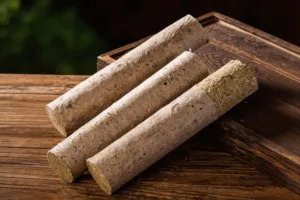
Why Does Moxa Stick Quality Matter in Moxibustion?
Moxibustion works because burning mugwort produces:
- Deep warming penetration
- Volatile herbal oils
- Herbal energy transmission
- Meridian stimulation
However, poor-quality moxa sticks often cause problems such as:
- Excessive heat and skin burns
- Strong, irritating smoke
- Uneven burning
- Weak therapeutic sensation
- Loose ash that falls apart easily
- Excess internal heat after use
In contrast, high-quality moxa sticks usually provide:
- Gentle and stable heat
- Strong heat penetration
- Softer smoke
- Natural herbal aroma
- Compact ash that stays intact
Through interviews with 100 frequent moxibustion users, we found that all of them believed choosing high-quality moxa sticks is more important than practicing moxibustion too frequently. This is because long-term use of low-quality moxa sticks may negatively affect the body and reduce the overall safety and effectiveness of moxibustion.
For example, one man we worked with had used low-quality moxa sticks continuously for three months. As a result, he began experiencing frequent dizziness, weakness in his limbs, and excessive sweating. However, after switching to Traditional Stone-milled Moxa Stick, his condition improved noticeably.

1. Choose the Right Origin: Qichun Moxa from Hubei Is the Preferred Choice
Why Is Qichun Mugwort Considered Authentic Medicinal Mugwort?
In Traditional Chinese Medicine (TCM), Qichun County in Hubei Province has long been recognized as best regions for growing mugwort.
Qichun offers ideal growing conditions, including:
- A humid climate
- Moderate temperature differences between day and night
- Mineral-rich soil
As a result, Qichun mugwort typically has:
- Thick leaves
- High essential oil content
- Fine and dense fibers
- More stable medicinal properties
The famous Chinese medical text Compendium of Materia Medica also praised Qichun mugwort for its superior quality. Because of this reputation, Qichun mugwort has become one of the most respected traditional medicinal herbs in China.
2. Check the Aging Time: Three-Year Aged Moxa Is Usually Best for Home Use
Why Fresh Mugwort Is Not Always Better
Many beginners assume that fresher mugwort must be better. However, mugwort actually becomes more suitable for moxibustion after aging.
Fresh mugwort often contains:
- Excessive volatile oils
- Strong and harsh heat
- Higher burning temperatures
As a result, Users who use fresh mugwort may experience:
- Strong burning sensations
- Skin irritation
- Dry mouth
- Excess internal heat
On the other hand, naturally aged mugwort becomes:
- Less harsh
- Gentler in heat
- More stable in penetration
Among different aging periods, three-year aged moxa is generally considered the most balanced option for home wellness use because it maintains strong medicinal properties without becoming overly intense.
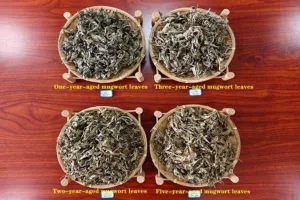
3. Choose the Right Mugwort Variety: Better Plants Create Better Moxa Sticks
Common mugwort varieties include five-point mugwort, seven-point mugwort, and nine-point mugwort. Among them, manufacturers most commonly use five-point and seven-point mugwort in the market. However, growers rarely produce nine-point mugwort because it is extremely scarce and yields very low harvests, so consumers seldom see it in commercial moxa products.
Why Does Mugwort Variety Matter?
Different mugwort varieties directly affect:
- Fiber quality
- Burning stability
- Floss yield
- Aroma concentration
High-quality mugwort usually features:
- Broad and thick leaves
- Rich fine hairs
- Delicate fibers
As a result, the finished moxa sticks burn:
- More evenly
- More smoothly
- More consistently
In contrast, low-quality mugwort often contains:
- Excess impurities
- Too many stems
- Coarse fibers
Consequently, low-grade moxa sticks may produce:
- Excess ash
- Unstable heat
- Heavy smoke
4. Check the Harvest Season: Mugwort Harvested Around the Dragon Boat Festival Is Best
A traditional Chinese saying states:“Mugwort in March is food, in May is medicine, and in July is grass.”
This saying reflects how mugwort changes throughout the growing season.
March Mugwort
Young spring mugwort is mainly used as food, such as:
- Mugwort rice cakes
- Traditional herbal pastries
At this stage, the medicinal properties are still relatively weak.
May Mugwort
Mugwort harvested around the Dragon Boat Festival is traditionally considered the best for medicinal use.
During this period, mugwort contains:
- Higher essential oil content
- Mature medicinal properties
- Stable leaf quality
Therefore, all premium moxa sticks use mugwort harvested around the Dragon Boat Festival.
July Mugwort
Later in summer, mugwort becomes:
- More fibrous
- More woody
- Less fluffy
As a result, its medicinal quality decreases significantly.
For this reason, high-quality producers typically emphasize:
- One harvest per year
- Dragon Boat Festival harvesting
5. Evaluate the Manufacturing Process: Traditional Stone Mortar Processing Preserves Better Fiber Quality
What Is the Difference Between Handmade and Machine-Made Moxa Sticks?
Today, manufacturers mainly use two production methods.
Traditional Handmade Stone Mortar Processing
Traditional methods involve:
- Natural drying
- Repeated pounding
- Slow stone mortar grinding
This process minimizes damage to the mugwort fibers.
As a result, handmade moxa sticks usually offer:
- Fluffier moxa floss
- Better preservation of medicinal properties
- Softer smoke
- More stable burning
High-Speed Machine Grinding
Machine production improves efficiency and lowers costs. However, high-speed cutting can also:
- Break the fibers
- Reduce fluffiness
- Weaken heat penetration
Low-cost machine-made moxa sticks often produce:
- Excessive smoke
- Harsh odors
- Dark or uneven burning
Therefore, for long-term home moxibustion, traditional handmade moxa sticks are generally the better choice.
6. Check the Wrapping Paper: Mulberry Paper Is Safer and Burns More Evenly
Many people ignore the outer wrapping paper when buying moxa sticks. However, the wrapping material directly affects:
- Airflow
- Burning speed
- Smoke quality
- Safety
Why Do Premium Moxa Sticks Use Mulberry Paper?
Traditional mulberry paper has long been used in herbal medicine packaging because it offers:
- Excellent breathability
- Stable burning performance
- Strong durability
- Mild odor
Some traditional practitioners also believe mulberry paper may provide supportive herbal benefits.
In contrast, ordinary industrial paper may contain:
- Chemical odors
- Bleaching residues
- Poor burning stability
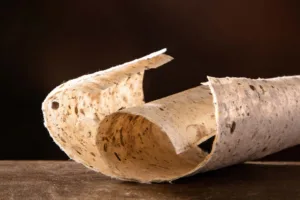
Easy Ways to Identify High-Quality Moxa Sticks
1. Examine the Color of the Moxa Floss
Premium moxa floss usually appears:
- Earthy yellow
- golden yellow.
In addition, the floss should look:
- Fine and soft
- Low in impurities
If the color appears overly green, the mugwort may not be aged properly.
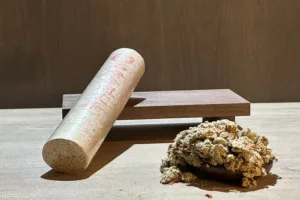
2. Smell the Aroma
Good aged moxa should smell:
- Naturally herbal
- Mild and comfortable
- Free from mold
However, poor-quality moxa may smell:
- Sour
- Damp
- Sharp and irritating
3. Observe the Burning Performance
When high-quality moxa burns, it typically produces:
- Light white smoke
- Gentle and stable heat
- Firm gray-white ash
By comparison, low-quality products often create:
- Thick black smoke
- Excess falling ash
- Aggressive flames
4. Feel the Texture
A well-made moxa stick should feel:
- Firmly rolled
- Slightly elastic
- Compact without falling apart easily
The moxa floss itself should also feel soft and delicate.
Final Thoughts: 6 Key Standards for Choosing High-Quality Moxa Sticks
When choosing moxa sticks, remember these six important standards:
- Choose Qichun mugwort from Hubei
- Select around three years of aging
- Use authentic high-quality mugwort varieties
- Prefer Dragon Boat Festival harvests
- Choose traditional handmade processing
- Look for mulberry paper wrapping
Ultimately, a truly good moxa stick should provide:
- Gentle heat
- Stable burning
- Strong penetration
- Comfortable long-term use
Experienced moxibustion users often notice that premium moxa sticks develop a softer, natural herbal aroma after burning for several minutes rather than producing a harsh burnt smell.
If you are unsure which moxa stick to choose, starting with a handmade three-year aged Qichun moxa stick is usually a safe and balanced option for most home moxibustion needs.
Want to learn more about moxibustion?
Share This Article, Choose Your Platform!
Related News
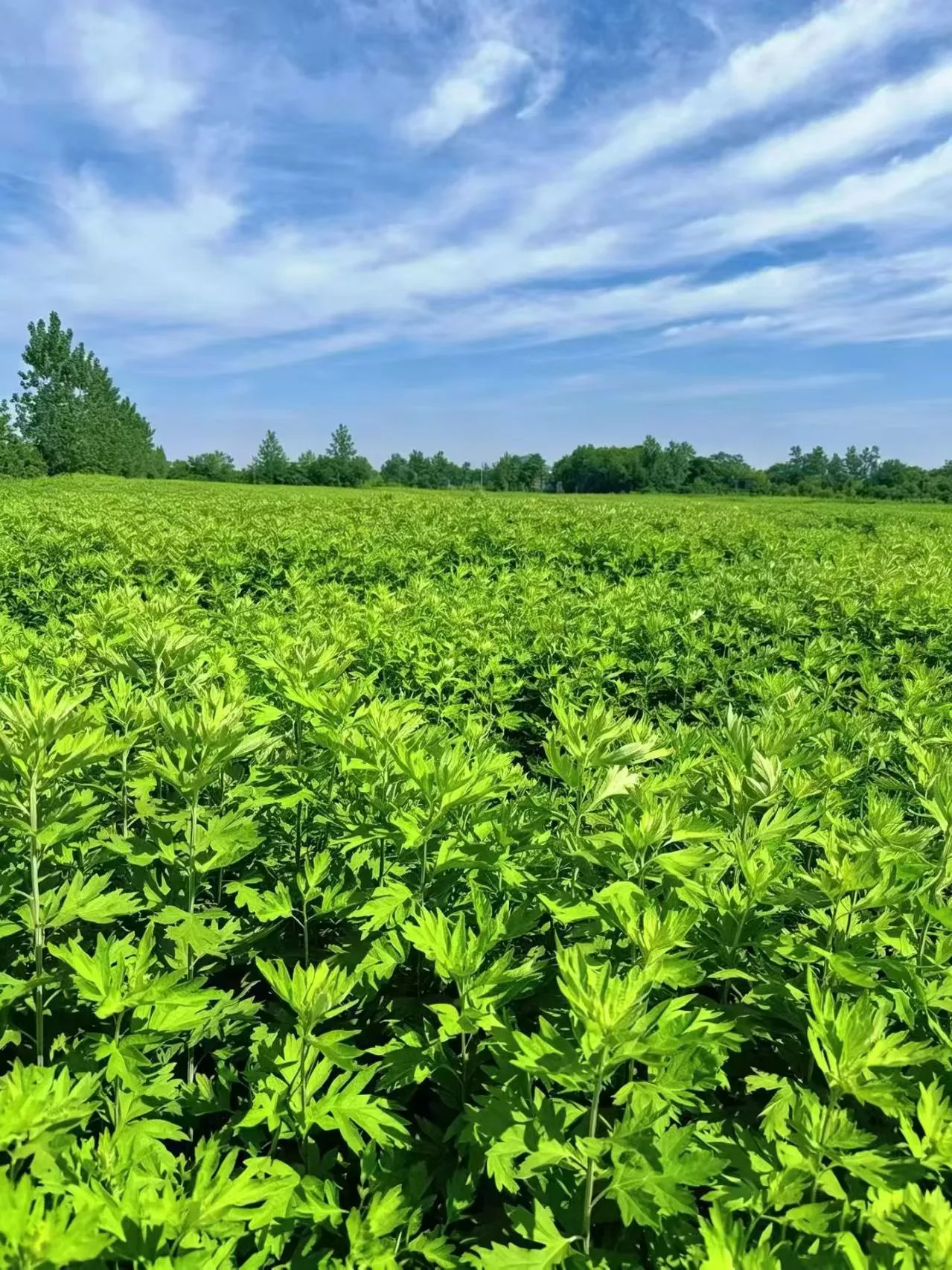
Qi Ai (蕲艾) — mugwort cultivated in Qichun County, Hubei Province, China — is not merely another variety of Artemisia argyi. It is the only moxa variety explicitly named and endorsed in classical Chinese pharmacopoeia, and its superiority is now validated by an extensive body of modern laboratory research. Across 10 peer-reviewed studies published in Chinese medical journals indexed [...]

As more people seek natural approaches to relaxation and self-care, the moxibustion studio has emerged as a distinct wellness destination. Today, we take you inside a thoughtfully designed traditional moxibustion center — a two-story independent space that blends modern aesthetics with the warmth of time-honored practice. Whether you are planning your own moxibustion studio layout [...]
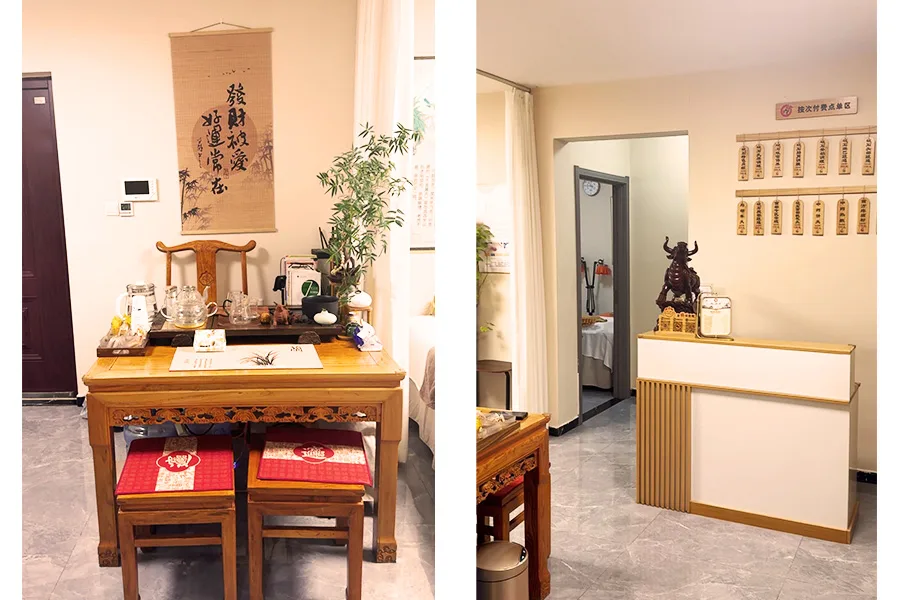
How to Start a Profitable Moxibustion Studio with Low Investment(Part 3) Introduction: Your Dream of Owning a Moxibustion Studio Is Closer Than You Think Opening a moxibustion studio may sound like a major undertaking — expensive equipment, large commercial space, a full team of staff. But here's the reality: with today's turnkey solutions, you can [...]
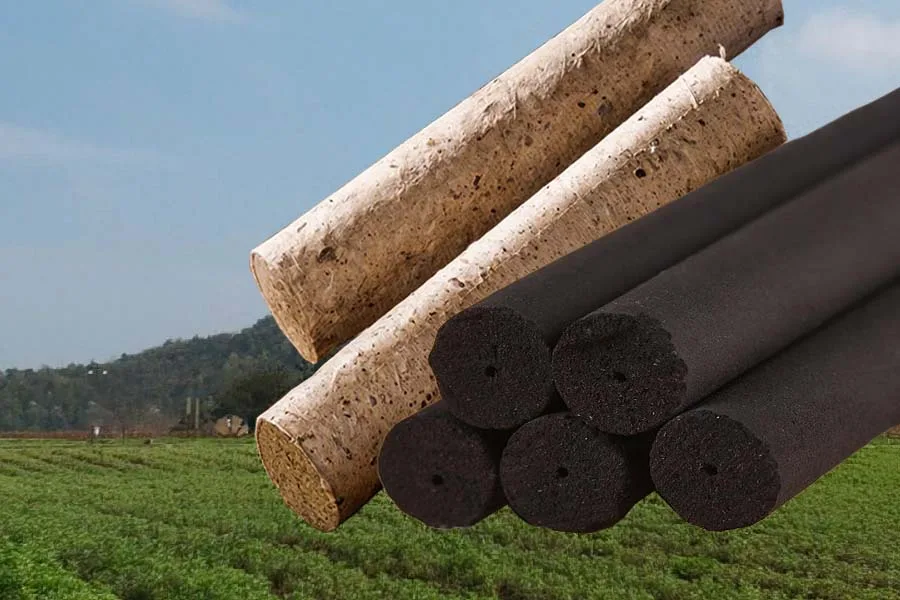
Many people may not fully understand the differences between smokeless moxa sticks and traditional moxa sticks. Today, we'll explain the differences from three aspects: manufacturing process, smoke production, and moxibustion performance. Before that, let's first define what smokeless moxa sticks and traditional moxa sticks are. Smokeless Moxa Sticks Smokeless moxa sticks are made by carbonizing [...]

How to Start a Profitable Moxibustion Studio with Low Investment(Part 2) As interest in wellness and preventive healthcare continues to grow, more people are exploring natural health practices rooted in Traditional Chinese Medicine (TCM). Among them, moxibustion has gained increasing popularity due to its long history, ease of use, and wide range of wellness [...]
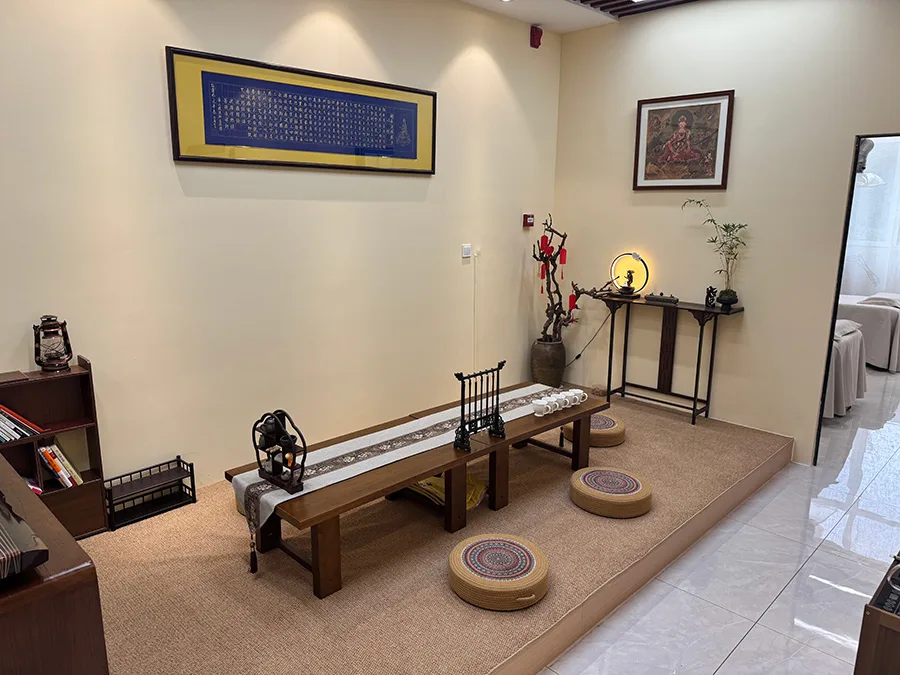
As more people focus on wellness and preventive healthcare, moxibustion has gained increasing attention around the world. As a traditional therapy in Traditional Chinese Medicine (TCM), moxibustion is valued for its warming properties, ease of operation, and wide range of applications. For entrepreneurs looking to enter the wellness industry, opening a small Moxibustion Studio can be [...]